

Manufacturing & Factory Staffing
Production, assembly and packaging staff for single or multi-shift plants.
Workforce solution
When you need 10, 50 or more employees in the same period, we run the whole process on a single plan — from the position plan and candidate pool to group assessment and staggered starts.

Recruitment is not labour subcontracting or labour leasing. In recruitment, employees join your payroll; we run the candidate pool, assessment and start coordination.
In managed services (a service contract), the operation is run turnkey under Gini Talent’s coordination; work organisation and day-to-day direction are our responsibility. Gini Talent takes on full management of lawful payroll, wages, social security (SGK) and statutory personnel rights for the workers, within Labour Law No. 4857 and related social security legislation. Occupational health and safety is run in joint coordination according to the actual situation on site.
Under Article 2 of Labour Law No. 4857, your company as the principal employer is jointly liable with Gini Talent for obligations to the workers arising from the Labour Law, the employment contract and any collective agreement. The service contract therefore also sets out how wage, SGK and statutory payments are documented.
The model and responsibilities are agreed in writing before anyone starts.
Filling a 50-person shift with a single job ad makes assessment inconsistent and raises no-shows. In mass hiring we first build a pool by role, shift and location, then screen everyone against the same criteria. For welders, CNC operators and forklift operators, vocational certificates (MYK where required) sit next to a practical test — not a CV alone.
Group interviews let your HR team lock a shortlist in a day without wrecking the calendar. The KPI is people who actually start on the planned shift, not the number of CVs received.
On a 50–100 person facility opening, putting everyone on the same Monday overloads induction and inflates ghosting. Key roles (shift supervisors, team leads, maintenance) start in the first wave; operators and warehouse teams follow the training calendar. The line fills without the roster collapsing.
Accepting an offer is not the same as arriving for the shift. To cut ghosting on 50–100 person openings we lock four steps:
| Measure | Traditional ads | Mass blue-collar hiring |
|---|---|---|
| Sourcing | One channel, inbound CVs | Regional pool, multiple channels, reserve list |
| Assessment | CV and a single interview | MYK / practical test, group interviews |
| Success metric | Ad closed | People starting on the planned shift and first-30-day attrition |
| Starts | One by one, scattered dates | Staggered groups aligned to the roster |
| Payroll | Often unclear | Recruitment or managed services, in writing |
| Role | Example assessment | Typical focus |
|---|---|---|
| Welder | MIG / MMA practical test | Weld quality, MYK, shift fit |
| CNC operator | Drawing reading, caliper measurement | Tolerance, machine type, certificates |
| Forklift operator | Licence check, on-site handling | Permit, warehouse layout, shifts |
| Warehouse / packing | Pace, attention, shift fit | Location, shuttle, first-30-day retention |
For employer cost (net / gross / total) use the Türkiye Salary Calculator with current parameters. Read the line items in our proposal next to that estimate.
Process
Positions, headcount, shifts, location and target start date are defined by line and shift.
Sourcing channels, assessment method and a staggered start schedule are agreed together.
We reach the target audience through regional channels, referrals and candidate databases.
Screening calls, practical tests and interviews produce a shortlist that you approve.
Employees start in planned groups; drop-outs in the first 30 days are tracked and reported.
Sectors
Production, assembly and packaging staff for single or multi-shift plants.

Warehouse teams, certified forklift operators and order pickers.
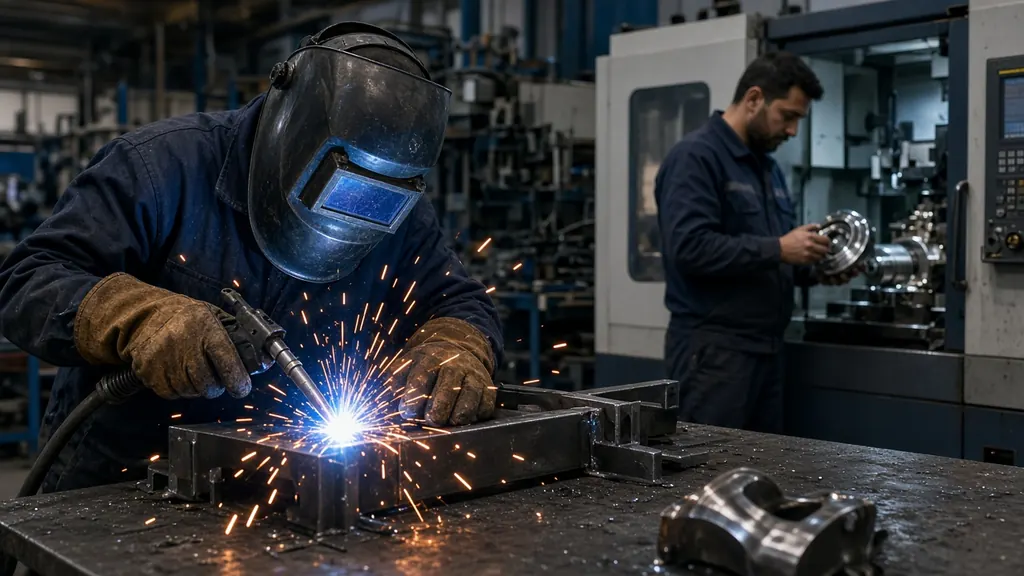
Skilled welders, CNC operators and maintenance technicians.
Hygiene-ready production and warehouse crews for food plants, packing lines and cold chain.

Skilled trades and site workers for programmes where headcount has to arrive on a schedule, not eventually.
Welders, electricians, mechanics and maintenance technicians tested against the standard your site actually requires.
Hotel, restaurant, catering and facilities crews — housekeeping, canteen and site-support headcount.
Questions
Vocational fit (MYK where the role requires it), practical tests, a written statement of whose payroll workers will be on (recruitment or managed services), first-30-day attrition tracking, and the capacity to run group interviews for 10+ hires.
A mass hiring approach usually pays off when you need 10 or more people for similar roles in the same period. We also assess smaller needs based on your brief.
It depends on the roles, headcount, location and shift pattern. After the needs analysis we give you a realistic hiring timeline.
We run screening and assessment; you approve the shortlist and make the hiring decision.
We follow the first 30 days after start and report the reasons for leaving. Conditions such as replacement candidates are defined separately in the proposal.
Share your need in a short form. We’ll review it and come back to you with the next steps.