
Which skills should I look for?
- Fine motor skills and precision
- Following work instructions and assembly diagrams
- Using hand tools and simple pneumatic tools
- Attention to quality standards and reporting defects
- Consistency in repetitive tasks
Manufacturing & Factory Staffing
Assembly workers who assemble parts and run in-process checks according to work instructions on electronics, white goods, automotive and machinery lines.
Looking for Assembly Worker jobs? This page is for employers. See open positions
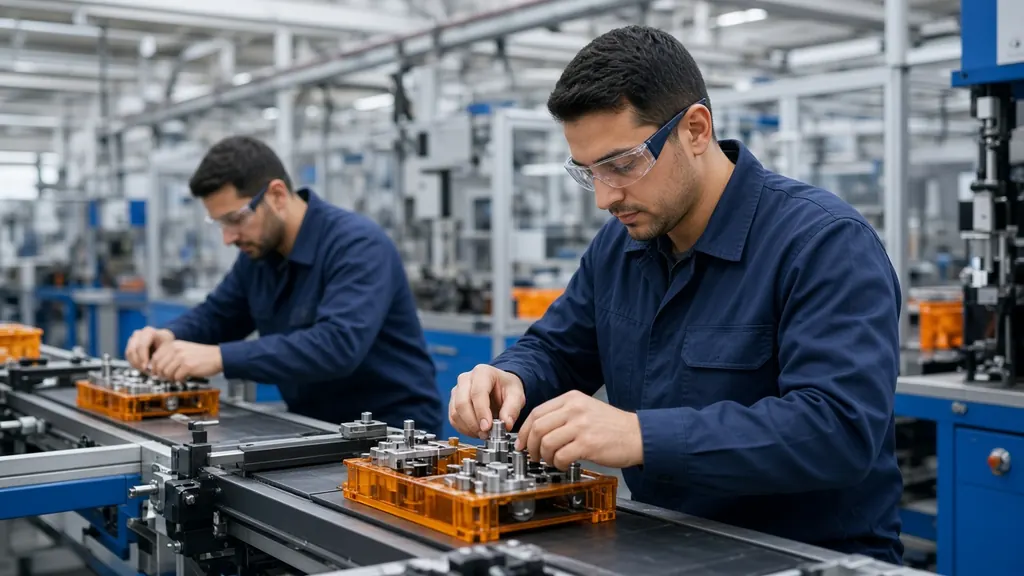
Assembly worker recruitment means finding candidates whose fine motor skills and ability to follow instructions match your line speed and quality targets, assessing them with a short hands-on task and starting them according to your shift plan. Simple assembly can start after brief training; precision assembly (for example electronics or automotive supply) needs experience.
In assembly, quality depends directly on dexterity and attention. We assess candidates less by their CV and more through short exercises that require following instructions and fine motor skills.
Assembly workers rarely need a vocational certificate; safety training is the employer’s duty. Where lines use power tools, torque tools or static-sensitive parts, we write extra training or experience requirements into the staffing need. We also assess whether a candidate reads work instructions and reports defects.
Official sources: Law No. 6331 on Occupational Health and Safety (in Turkish) · Vocational Qualifications Authority (MYK)
Assembly demand usually rises with model changeovers, new order periods or extra shifts. When line speed, target output and break patterns are explained up front, candidates start with realistic expectations. Peak periods get a seasonal hiring plan; permanent staff get a probation and onboarding programme.
The process starts with your staffing need: position, headcount, shifts, location and target start date. We then build a regional candidate pool, pre-screen by phone and assess candidates through a short assembly task; you approve the shortlist. Timing depends on headcount, location, shift pattern and pay level, so instead of promising a fixed number of days we share a written hiring timeline with the proposal. For hires of five or more people, starts are planned in staggered groups that match your training capacity.
Hiring brief
Related
Production workers who feed machines, check products and handle in-line tasks — and who fit your shift pattern…
Hiring guide for this rolePackaging workers who pack, label and prepare cartons in food, cosmetics, consumer goods and general manufacturing.
Hiring guide for this roleWe hire production, assembly and packaging staff for your lines in a planned way — people who fit…
Back to this sectorQuestions
It depends on the line. For simple assembly, candidates with good dexterity can start after short training; precision assembly usually needs experience.
Depending on the role, the test can take place at your facility or through an assessment that includes a simple assembly task.
Simple assembly fills about as fast as production work; precision assembly takes longer because the experience requirement narrows the pool. We confirm the exact timing in a written hiring timeline with the proposal, based on headcount, location and pay level.
Share your need in a short form. We’ll review it and come back to you with the next steps.